Chase's Journey: Finding Voice Through Disability Support and Self-Discovery:

Updated: 3 days ago
When Chase first connected with My Right 2 Voice over six years ago, he was a young person struggling to navigate a world that felt overwhelming and isolating.
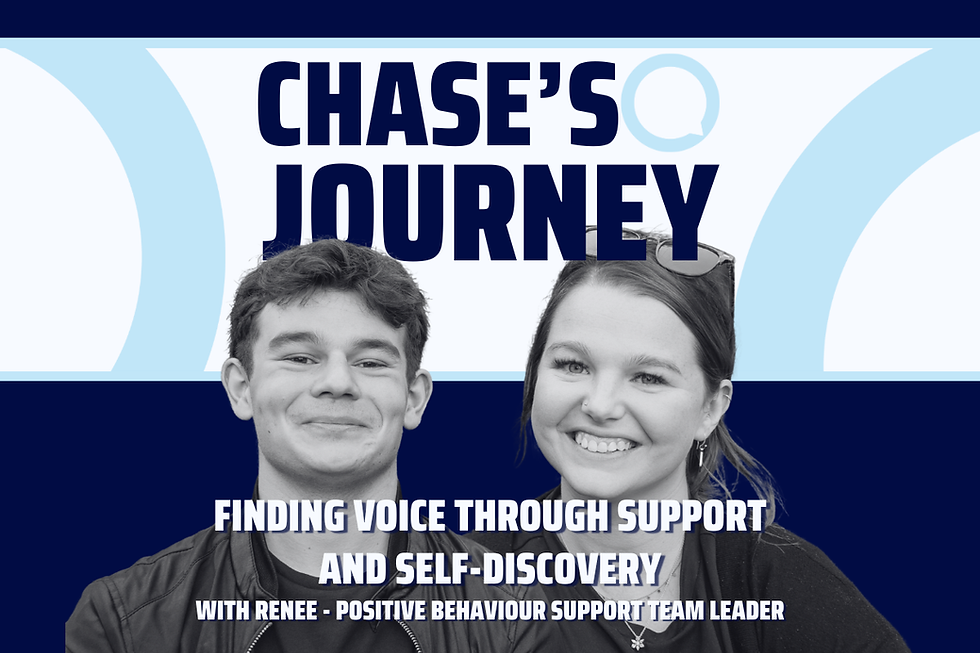
Note: this article was written based off transcriptions/interviews we've had with Chase from our VOICE campaign & ADHD Awareness month. This story is larger than our usual articles, but worth the read. See our other content on social media for video snippets.
Today, he's more confident, recent graduate of year 12 who loves rock climbing, socializing with friends, and advocating for greater understanding of ADHD and autism. His transformation didn't happen overnight, it's the result of dedicated support, brave choices, and a commitment to pushing through fear.
The Early Days: Working through Isolation
Six years ago, Chase described himself as "like a hermit." Social interaction felt impossible, anger came easily, and the outside world seemed more threatening than inviting. "I really didn't like talking to anyone," Chase reflects. "I got angry very easily. I didn't socialize at all…"
For a young person with both ADHD and autism, the world presented constant challenges.
Sensory overwhelm
difficulty reading social cues,
and the exhausting work of "masking" trying to blend in by acting like everyone else.
This left Chase drained and disconnected.
"I guess I just felt like no one really understood," he explains. And he felt that he "didn't have anyone who cared."
Disability Support: The Role of Positive Behaviour Support

This is where Renee, Chase's Positive Behaviour Support (PBS) practitioner, entered the picture. Rather than trying to "fix" Chase or push him into uncomfortable situations, Renee created something different: a safe space where Chase could be heard, understood, and supported at his own pace.
"One big thing that's helped me a lot is just going out and I guess pushing through that fear," Chase says. "Obviously it was terrifying doing these new things. Like, I would have never gone bouldering, or like, done anything outdoors, had people not tried to push me to do it in like a supportive way."

The distinction is crucial. Chase wasn't forced or pressured, he was encouraged and supported. Renee and his disability support team helped him recognise that the anxious thoughts holding him back "What if I do something weird? What if this person hates me?" were often not based in reality. "Now I see if I were to do that in that situation, I probably would have made a friend," Chase reflects. "None of that stuff is true."
The Breakthrough: Discovering Bouldering
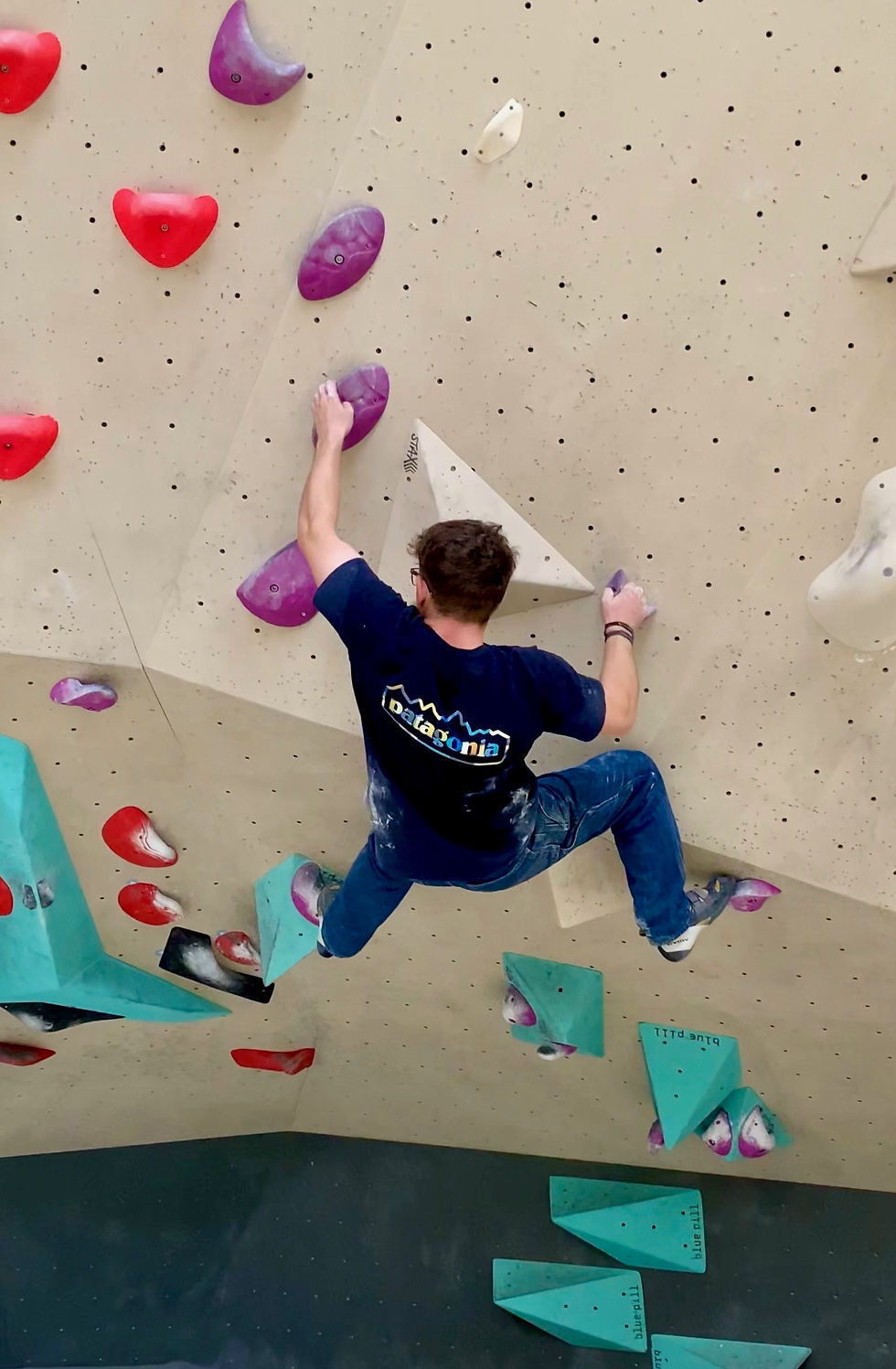
Bouldering became Chase's turning point. What started as a terrifying new activity became a passion that transformed multiple aspects of his life. "The more I tried these things, I started to actually enjoy them. They got easier," Chase explains. "And now it's just something I actually love doing. I can't live without stuff like this."
Beyond the physical benefits, bouldering provided something essential for someone with ADHD: dopamine regulation through enjoyable exercise. "If I'm just at home, I don't really have much to do," Chase notes. "Bouldering is such a rewarding thing. Having that kind of thing just makes my life so much happier."

The sport also opened doors to social connection. At the climbing gym, Chase found a community where his unique qualities were celebrated, not criticized. "I love talking to people now because I get to socialize without as much awkwardness," he says. Success in one area built confidence in others, creating a positive cycle of growth.
Understanding ADHD and Autism: Learning to Self-Advocate
As Chase grew more confident, he also grew more curious about his own neurodivergence. "When I was younger, I never really knew much about ADHD and disabilities," he admits. "But I started diving into what ADHD meant and how things affect me."
This self-awareness became a powerful tool. Chase learned to recognise when he was becoming overstimulated, when the noise, lights, and social demands of an environment became too much. He developed strategies:
writing things down when he goes non-verbal
using music to help focus, and most importantly,
communicating his needs to the people around him.
"If you're with your friends or something, try and just let them know, I'm feeling low energy," Chase advises. "A lot of people really understand. Just let people know."
Chase also discovered personal regulation techniques that work specifically for him. "I have to blast drum and bass music in my ears to focus on work," he explains with a laugh. "Someone will be like, 'Oh my God, it's so loud,' but I need it. Music gets my energy levels up."
Breaking Down Stereotypes
One aspect of Chase's journey that continues to frustrate him is confronting stereotypes about autism and ADHD. "People think autism means you're stupid or something," he says. "Or someone might say, 'Oh, you don't slap your hands in the air, you don't seem very autistic.' That's so annoying because none of it's true. Everyone's different."
His advice for others?
"People should just be aware of those feelings when you say stuff like that. Everyone's different and everyone has feelings. Stuff like that's really hurtful for us."
Chase doesn't want to be defined by labels. "I should be considered the same as everyone else, like human beings," he states simply. "I feel things too."
The Power of Person-Centered Support
Looking back on his journey, Chase credits much of his progress to having consistent, caring support. Beyond Renee, he mentions his therapist, school support workers, family, and friends who showed up for him consistently, even when he couldn't always articulate what he needed.
"I guess I just feel more supported now," Chase reflects. When he didn't feel supported, that frustration manifested as anger. "I guess I kind of realized that there are people that keep showing up to care every day.
I started to notice things a little bit more."
The school support workers played a particularly important role. "They've helped me by getting into conversations while being scared,"
Chase says. "They've really tried to help me overcome that fear by being calm with me in a lot of those situations. It made things easier."

A Shift in Perspective

Perhaps the most significant change in Chase's journey has been internal: a shift from focusing on the negative to recognizing the positive. "I definitely just try to think more about the positives now," he explains. "I never really saw a lot of good things in my life because I just focused on the bad. But there's so much good in my life, even the little things really matter."
Those little things include his daily coffee ritual, time spent with friends, progress on challenging climbing routes, and moments of genuine connection with others. "If you're going through it, you've got to really understand that a lot of people might upset you or not understand things, but that's just how it is. You can't change that.
It would be really good if people were more educated…”
Embracing Being "Different"
Today, Chase has found something many people spend their entire lives searching for: self-acceptance. "I think being unique is like the coolest thing ever," he says enthusiastically. "I love just being different. Being normal is boring."
He's learned to appreciate the "little quirky things" in other people too, recognising that differences make life more interesting. "I see little quirky things in other people and I think that's so cool. I love it."
Advice for Others on Similar Journeys
When asked what he'd tell his younger self, Chase pauses thoughtfully. "I guess I'd just like to know that the stuff I went through was not really my fault."
For young people currently facing similar struggles, Chase mentioned: "Just keep trying. Keep pushing through. It's really hard, but eventually, with time, you can get better. It just takes time."
He emphasises the importance of finding what works for you individually. "Try to look for strategies that help you. For me, it's music, fidget toys, social interaction when I can handle it, lots of little things you might find for yourself."
And on World Autism Day/ADHD Awareness Month and every day after, Chase's message is clear: "I would like a lot more people to take two minutes out of their day to learn more and educate themselves about autism/adhd. Understand the difficulties. It takes like 30 seconds to learn something that could help you understand someone better."
The Journey Continues

Chase's story isn't finished, he's now finished year 12, with a whole life ahead of him. But the foundation he's built through person-centered support, brave choices, and self-discovery has positioned him for continued success.
From the young boy who struggled to leave his room to the confident teenager scaling climbing walls and advocating for neurodivergent awareness, Chase's transformation demonstrates what's possible when people receive the right support at the right time.
As Renee observed during their interview, "The young man you are today is just really nice to see."

Chase's journey with My Right 2 Voice is our commitment to person-centered advocacy and support. Through Positive Behaviour Support, other assisting services and consistent, caring connection, we help individuals discover their voice, build confidence, and create meaningful lives on their own terms.
Best Day Ever:

A reminder to anyone that experiences fear or anxiety about something unfamiliar, Chase has had countless times where he felt unsure about going to something, and ended up loving it.
Sometimes it's hard to recall the 'best days' when you're having a very down day so to remind Chase of this, Renee gave Chase this mini journal labelled 'Best Day Ever'.
This is to remind him of these great memories and experiences he has had, and then he can revisit them if he has those anxious or down feelings creep in again.
So now, Renee and Chase's groovy phase is 'BEST DAY EVER'... so Chase, we know you are going to have many more 'BEST DAY EVERs to come in the coming chapters of your life.
Our Final Message - from Renee:

And our final message to Chase from Renee .. "without repeating myself too much as Chase calls me 'cringe' quite often, I am so proud of the young man that he has become. All of 2025, the most common theme we have discussed and explored is around what life after high school and into his adulthood looks like for Chase and how scary that is. The fear of the unknown.
But, also how exciting for what fun & new experiences are yet to come. I feel very privileged to watch and play a part in your growth and and development over these numerous years and I look forward to walking with you in your next chapter. Chase, 'your wings already exist, all you have to do is fly'."
Coming soon!
We have some additional content coming soon in relation to Chase's story, and we can't wait to show you.
Take a look at our instagram for content Chase has done with us over the past year.


Comments